The building
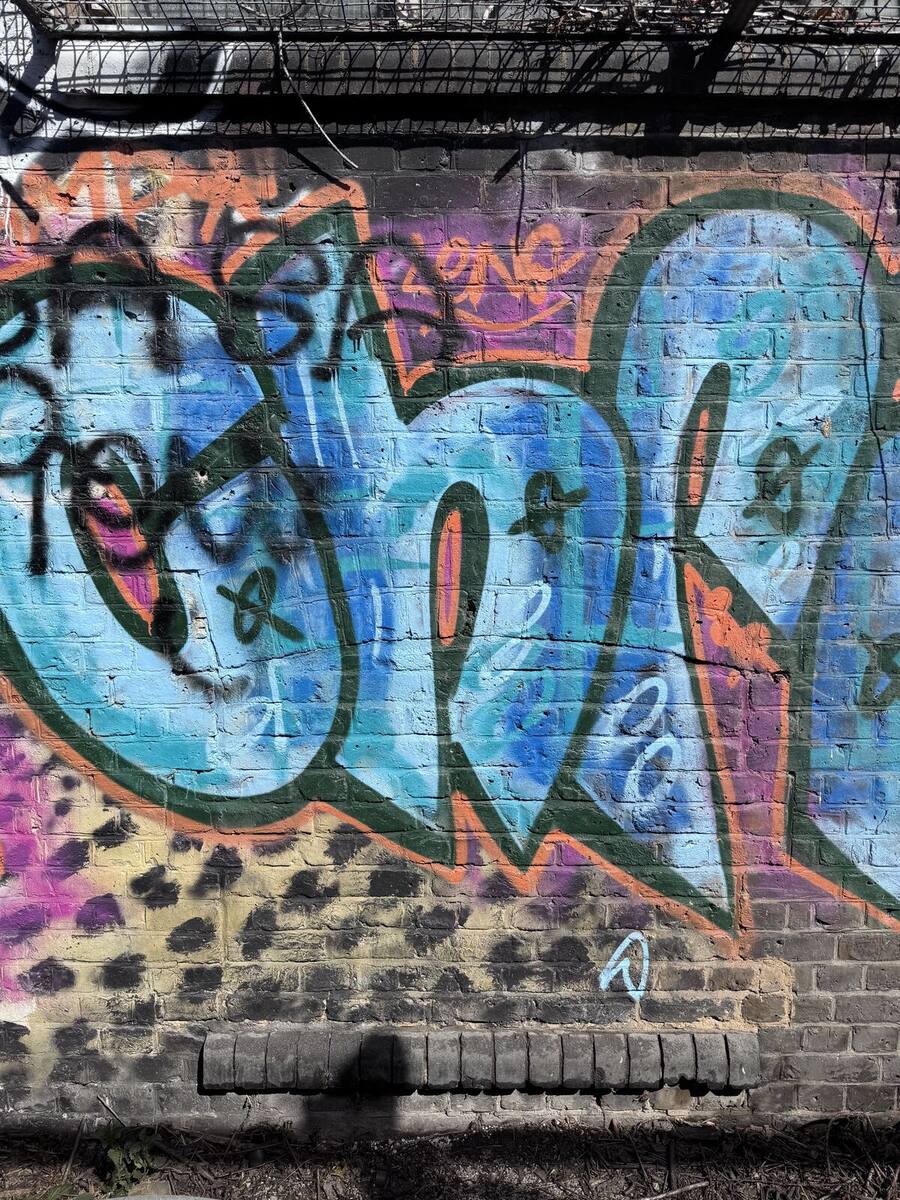
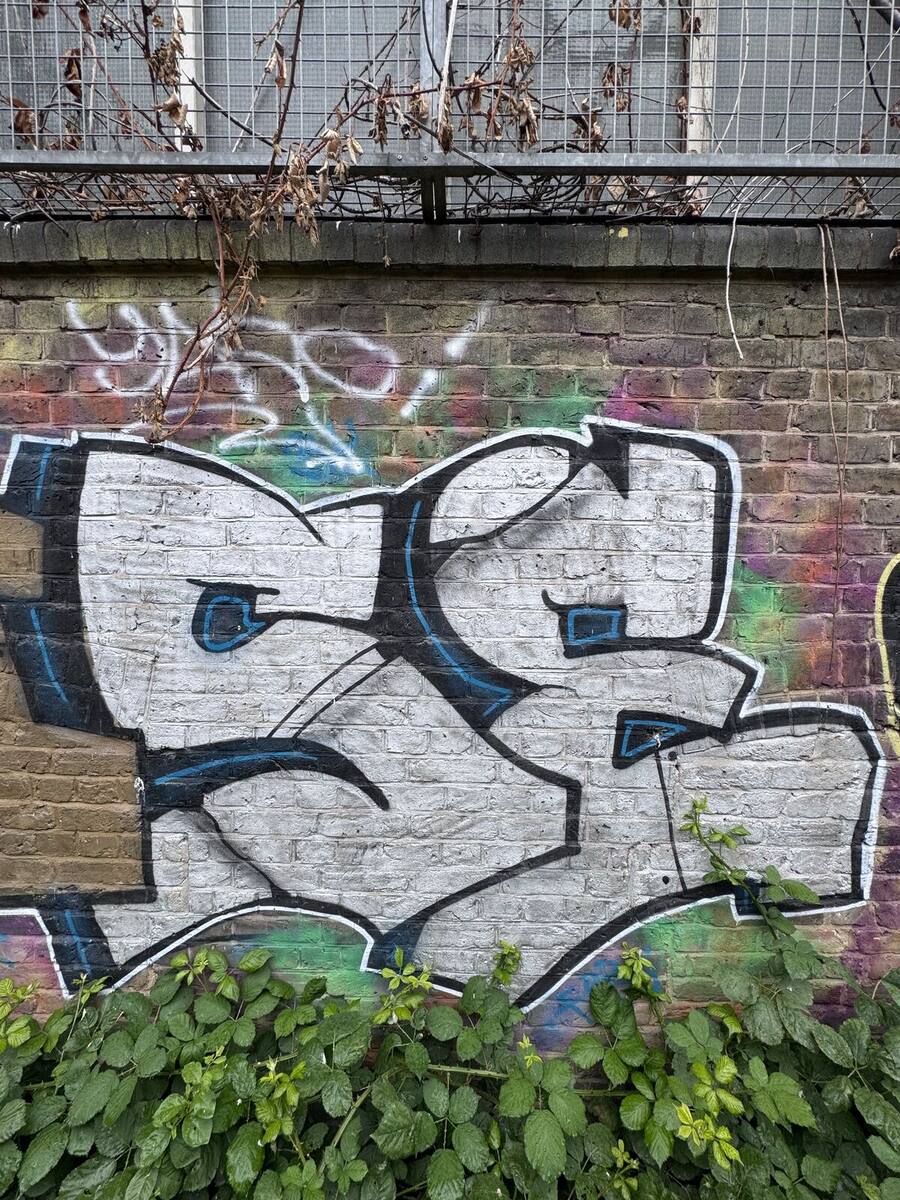
A long run of nineteenth-century London stock brick boundary wall, carrying multiple layers of aerosol graffiti built up over time, alongside general soiling and biological growth at the coping. Gauged brick arches were visible in places — and completely lost under paint in others.
The problem
London stock is a soft, porous brick. Aerosol paint doesn't sit on the surface the way it does on denser modern brick — it penetrates. Sandblasting or aggressive chemical stripping, the default approach from less specialist contractors, takes the brick face along with the paint. The removal method mattered as much as the removal itself.
The method
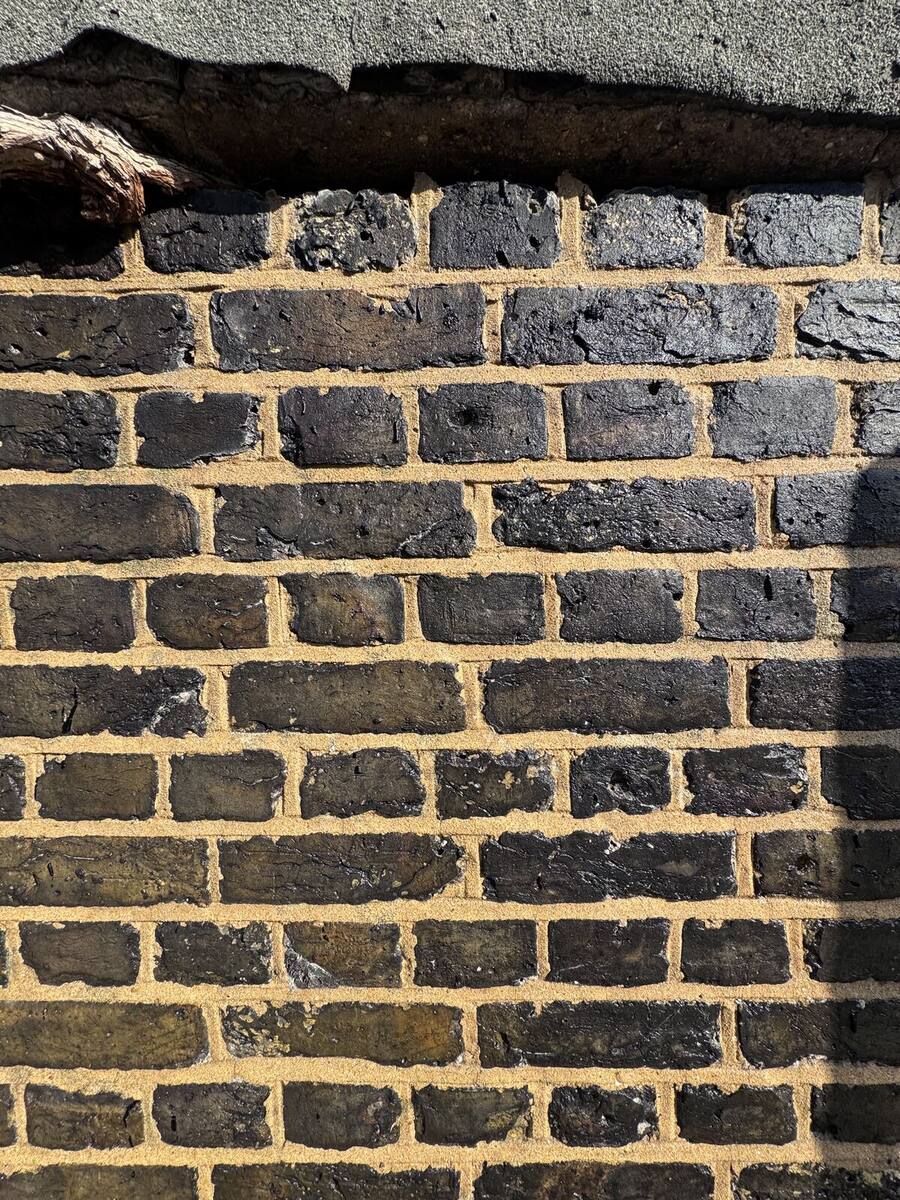
The paint was lifted with a targeted chemical poultice, applied in stages and given a full dwell period before removal, followed by a low-pressure DOFF steam rinse to clear residue and the biological growth at the coping. No abrasive blasting and no caustic stripping at any stage. Sections of eroded and cement-patched pointing were cut out and repointed in a lime mortar matched to the original joint colour and profile.
Sandblasting is the fastest way to remove graffiti from brick, and the fastest way to ruin it. It strips the hard fired outer skin of the brick along with the paint, leaving the softer body exposed and far more vulnerable afterwards.
The result
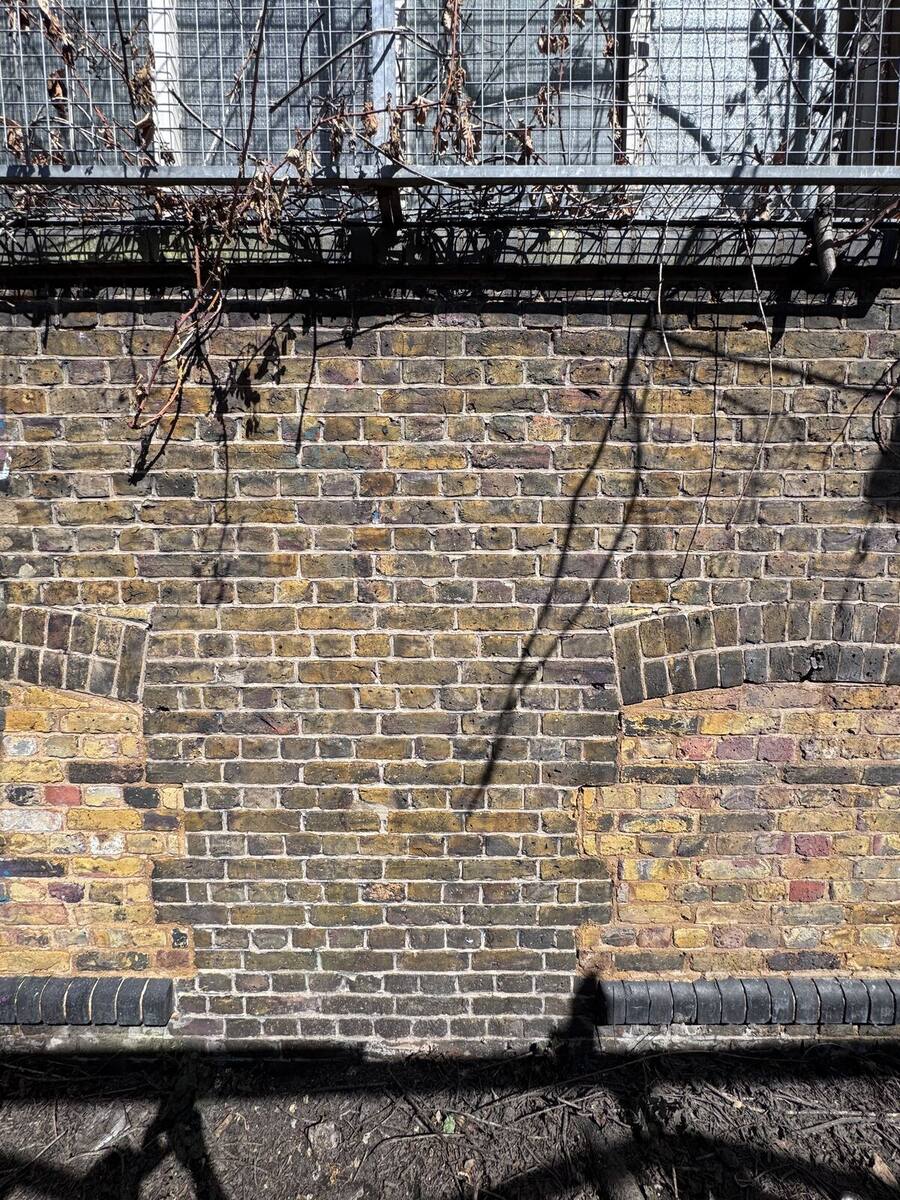
The wall reads as it was built: the varied yellows, purples, and browns of the original stock brick are visible again, including the gauged arch details that had disappeared entirely under the paint layers. No brick faces were lost in the process.
Looking for a similar project — the same material, the same building type, or the same problem? We are likely to have worked on something comparable and can talk it through on a free site visit.
Request a site visit