Ornate Stone Frieze
City of London • Grade II Listed
A heavily soiled Portland stone frieze with carved circular medallions and cresting, running at second-floor level on a Victorian commercial building in the City. Decades of atmospheric soot had reduced the carved detail to a near-uniform black. The stone beneath was intact.
The soiling was general atmospheric particulate — carbon deposits from decades of combustion — sitting on a stable sulphate layer. DOFF at 150°C, calibrated through a 1m² trial panel and pre-approved by the City of London Conservation Officer. Full facade clean over four days from hanging scaffold.
The result restored the depth and precision of the carved detail. Arrises that had been invisible under the soiling layer were visible again within hours of drying.
Baroque Broken Pediment
Westminster • Listed Building
A baroque broken pediment with acanthus scroll ornament and dentil cornice, forming the centrepiece of a late seventeenth-century Portland stone facade. The soiling was two-layered: general atmospheric deposit on the exposed surfaces, and dense sulphate crust in the sheltered recesses of the ornament where rainwater could not reach.
DOFF addressed the atmospheric soiling on the open surfaces. TORC vortex cleaning, using a 60-micron calcium carbonate aggregate, removed the sulphate crust from the sheltered detail without abrading the carved surface. The two methods were used in sequence, not simultaneously. Westminster Conservation Officer pre-approved the full method statement before works commenced.
Selective lime mortar repair to a damaged section of the acanthus scroll was carried out on completion. The repair was matched to the adjacent stone by colour assessment and is not visible at normal viewing distance.
Chimney Stack Restoration
Central London • Period Building
A Portland stone chimney stack showing extensive biological growth — algae, lichen, and moss colonisation — combined with atmospheric soiling and defective pointing. The stack had been repointed with hard cement at some point in the mid-twentieth century. The cement had cracked and was allowing water ingress into the stack itself.
DOFF at 150°C removed the biological growth and soiling. Following cleaning and drying, the defective cement pointing was removed using an oscillating multi-tool and replaced with a feebly hydraulic lime mortar (NHL 2) matched to the original. The corbel detail at the base of the stack was cleaned with particular care to preserve the carved profile.
Works were carried out from a mobile elevated work platform over two days. No scaffold was required. The stack is now watertight and the biological colonisation has been removed without any abrasive contact with the stone surface.
Ionic Capital, Column Shaft & Base
City of London • Grade I Listed
A free-standing Portland stone Ionic column showing soiling across the shaft and biological growth on the capital and base. The column sits in an exposed position and had been subject to repeat wet-dry cycling over many decades, resulting in some surface friability on the north-facing flank of the shaft.
DOFF cleaning was carried out first, at reduced temperature to account for the friable surface condition. Following cleaning and thorough drying, a consolidant was applied to the affected section of shaft: a compatible lime-based consolidant, applied by brush in multiple thin coats and allowed to carbonate between applications. The consolidant does not change the appearance of the stone and does not form a film on the surface.
Historic England was consulted on the consolidant specification given the Grade I listing. The full method statement and product data sheets were submitted with the Listed Building Consent application.
Ionic capital, cleaned Portland stone — City of London
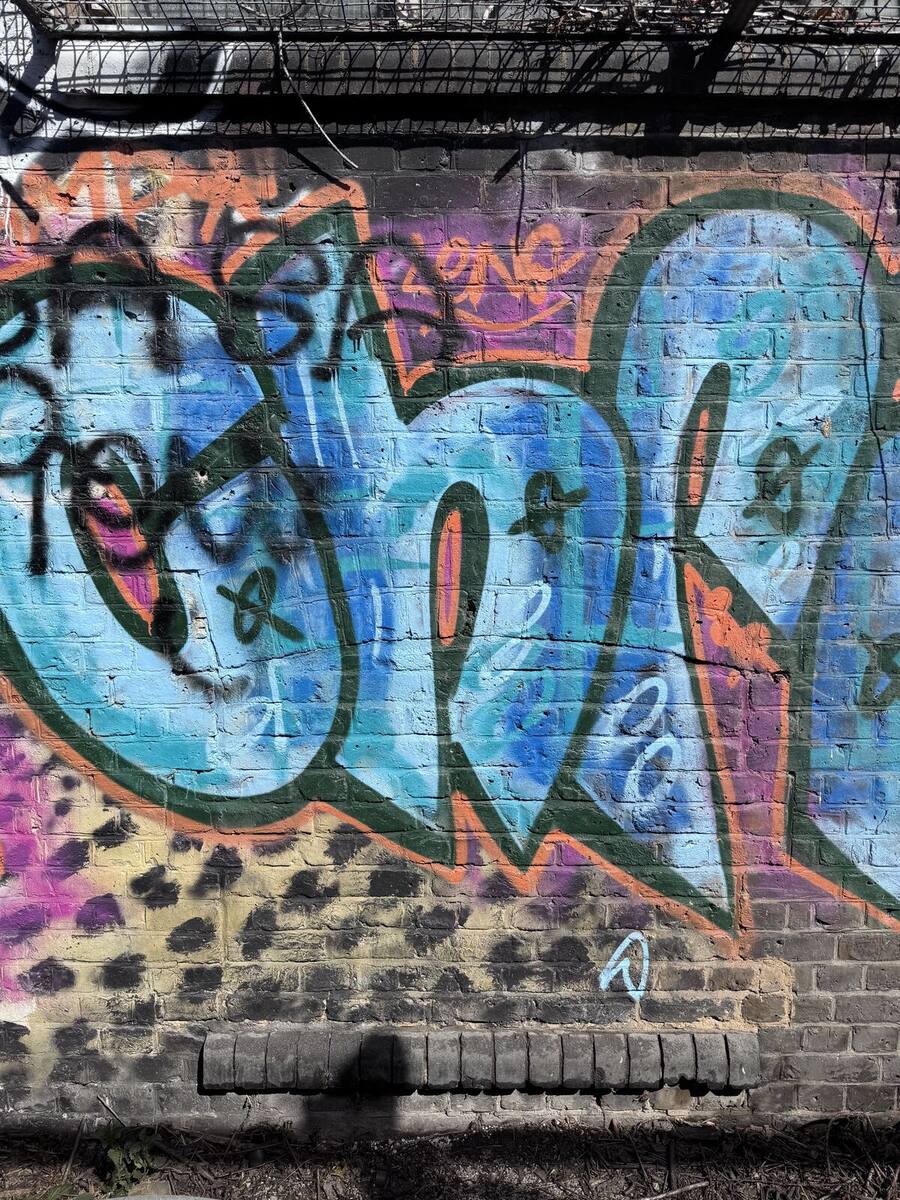
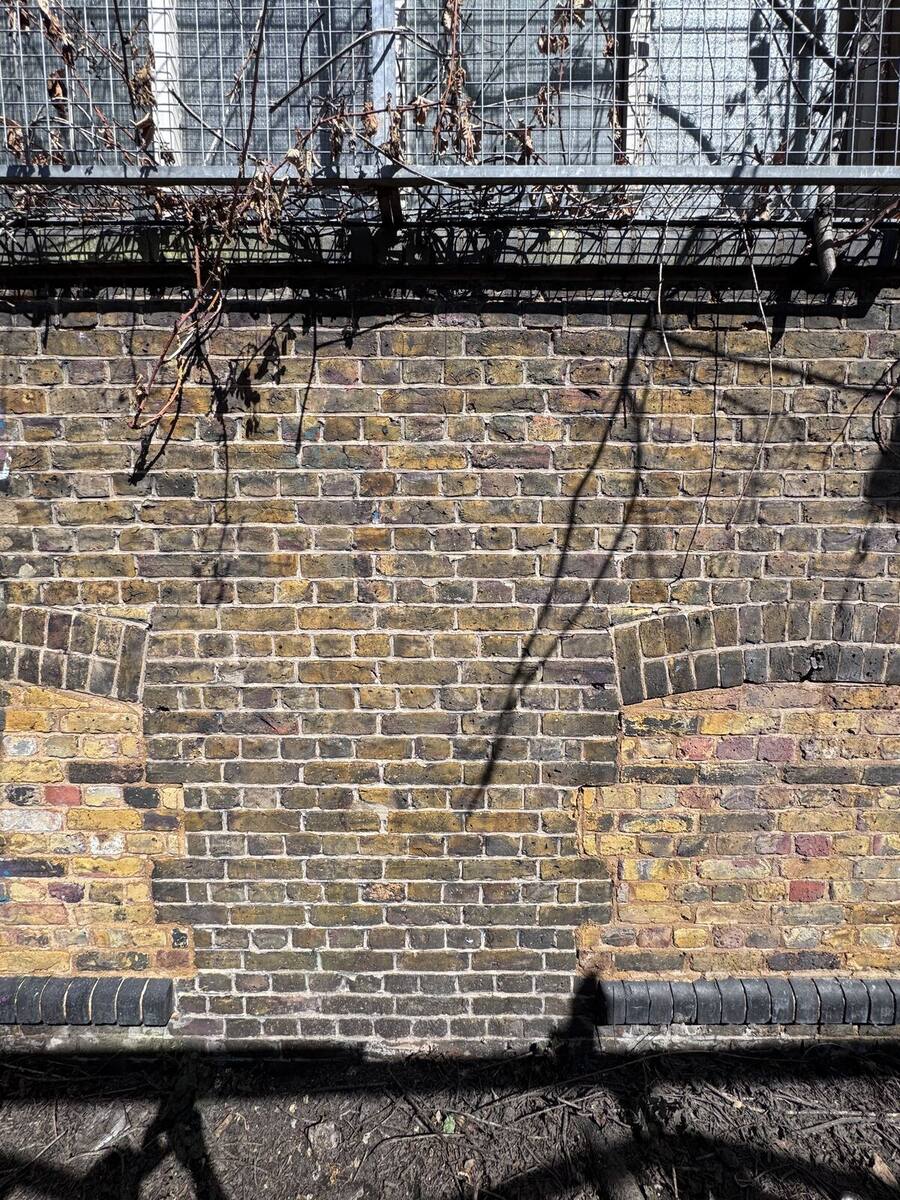
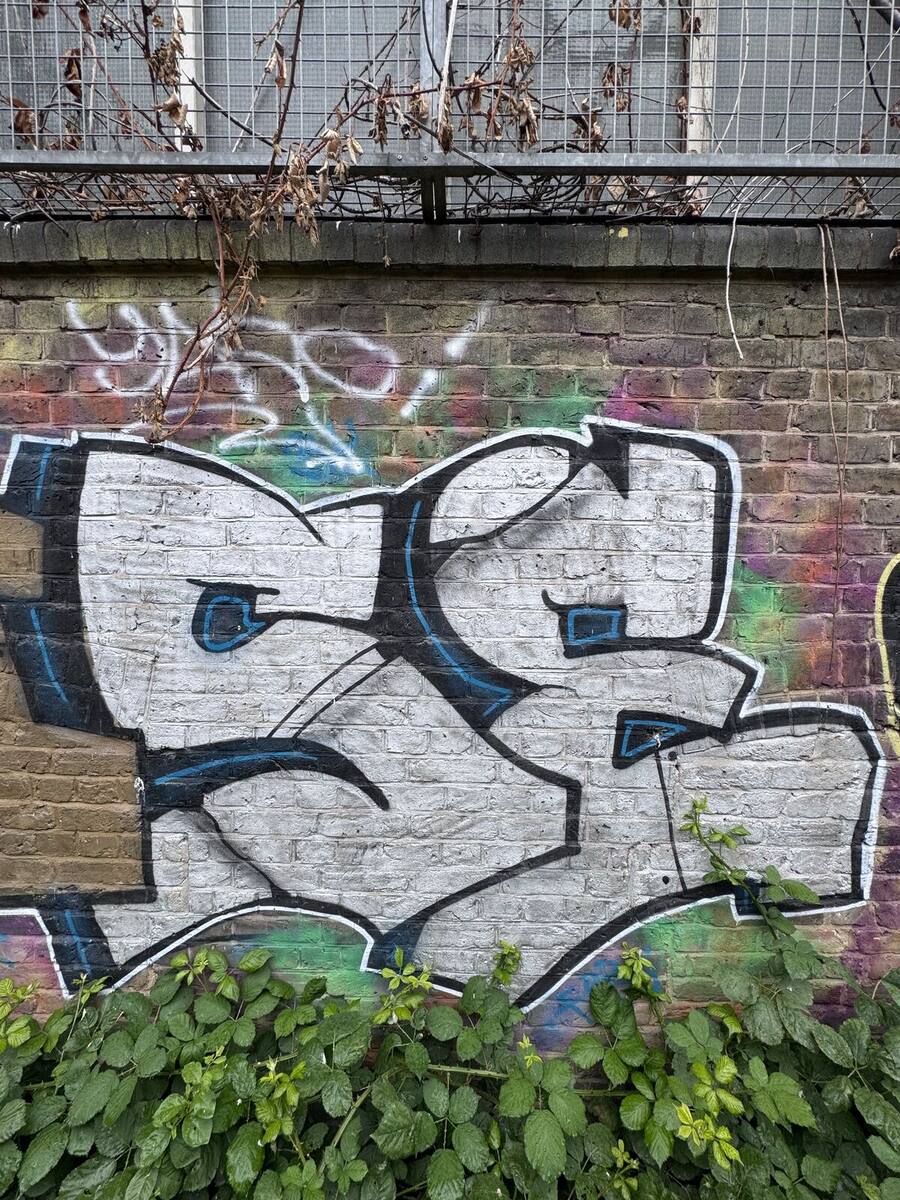
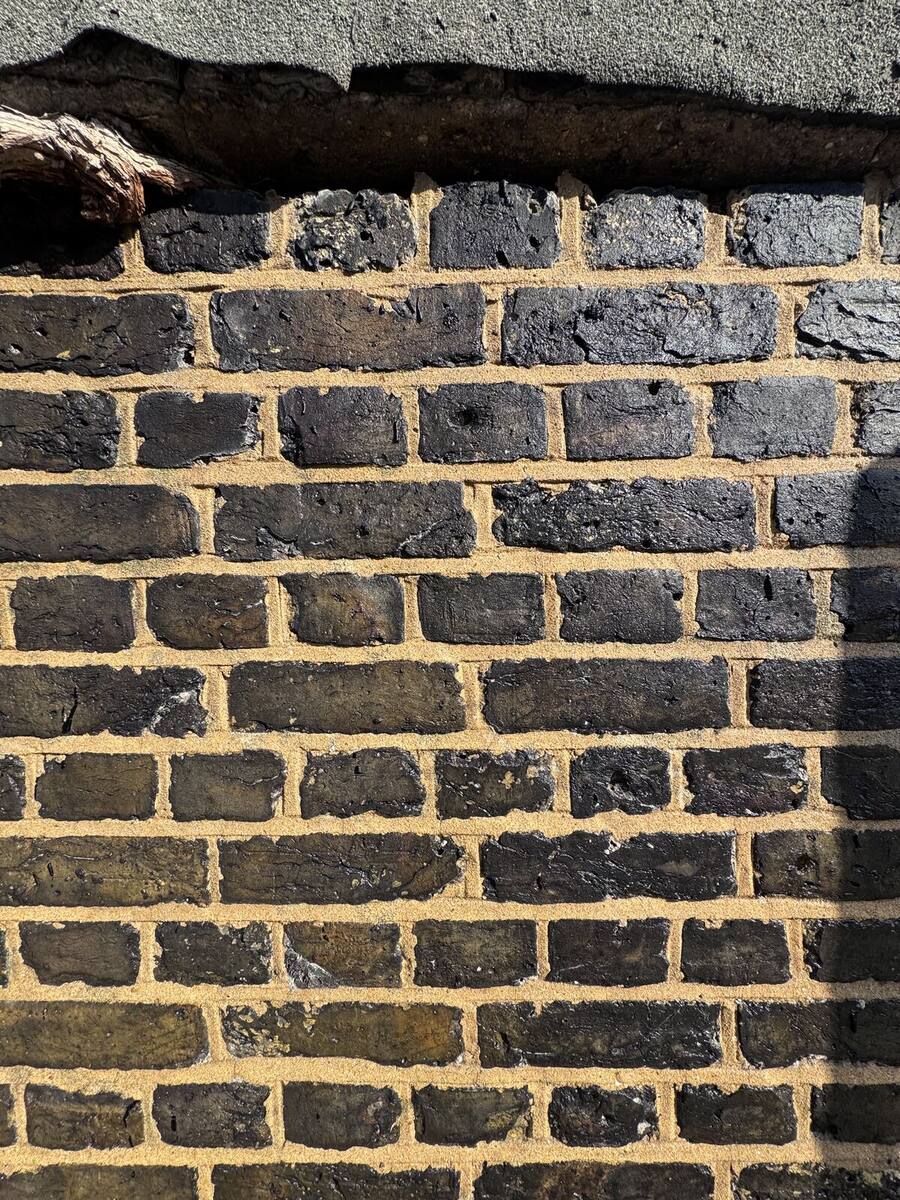
Graffiti removal and repointing, London stock brick boundary wall
Graffiti Removal, Brick Boundary Wall
London • Period Boundary Wall
A long run of nineteenth-century London stock brick boundary wall carrying multiple layers of aerosol graffiti, alongside general soiling and biological growth at the coping. London stock is a soft, porous brick, and aerosol paint penetrates the surface layer — the wrong removal method takes the brick face with it.
The paint was removed with a targeted chemical poultice, applied in stages and given a full dwell period before removal, followed by a low-pressure DOFF steam rinse to clear residue and the biological growth. No abrasive blasting and no caustic stripping at any stage. Sections of eroded and cement-patched pointing were cut out and repointed in a lime mortar matched to the original joint colour and profile.
The wall now reads as it was built: the varied yellows, purples, and browns of the original stock brick are visible again, including the gauged arch details that had disappeared entirely under the paint.
Brick Cleaning: Boundary Wall
London • Boundary Wall
A London stock brick boundary wall beneath an eave line, with moss, algae, and several self-seeded weeds established directly in open, eroded mortar joints. Not general atmospheric soiling — a biological problem, rooted in joint loss that had already begun before the growth took hold.
Growth was cleared by hand at the root first, since surface-only removal leaves regrowth. DOFF steam then addressed the algae and general soiling across the brick face. Open and eroded joints were flagged for lime repointing as a follow-on phase — cleaning the wall without addressing the joint loss that let the growth establish would only see the problem return.
The wall is now clear of moss, algae, and root growth, with the joint repair scoped as the next phase rather than treated as optional.
We document work as we complete it. More projects are added regularly.
If you are looking for a specific building type, material, or method and cannot find it here, contact us. We are likely to have worked on something similar and can discuss it directly.
Discuss your project